Thursday, September 21, 2017

Girraween


Last week I was camping in Girraween National Park. When we got there, we unloaded the bus and pitched the tents. The tents were set up in rows of 4. On this trip, there were 3 professors, 1 "tutor", 25 college students, and 1 11-year-old girl (me). The professors were my mom and her colleague, but the third professor's name is John Hall. John Hall is the professor who gives all of the lectures on this trip. John Hall in a botanist which means he is a tree hugger. Just kidding, his studies plants and he teaches students about plants animals and fires in national parks. On this trip, we had a tutor/assistant named Sheree. Sheree was so cool, she studies microbiology and she is a volunteer firefighter. Sheree went on hikes with us and she even brought special cameras so that we could watch the possums walk around our camp kitchen at night!  Every day in Girraween we would go on a hike. One of the hikes we went took us to Castle Rock, the Sphinx, and Turtle Rock. When we got to Turtle Rock we had the choice to go through Turtle Rock or just go back the way we came. The whole group chose to go through the Turtle. What I mean is we scrambled over and under 200,000,000-year-old granite rock, it was so much fun.


Girraween National Park is a 3-hour drive from Brisbane. Girraween is also part of the Granite Belt, which means that everything is made out of granite even the soil is made out of granite sand. The rock in Girraween is 200,000,000-years old, that means these rocks were around during the dinosaurs! Sheree told us how soil forms in the region. There are 2 different ways that soil forms from granite. The first way is when rainwater washes away tiny pieces of granite from the rocks and eventually forms a pile of sand. The second way is when algae and lichen are growing on the rock together.  Algae and lichen have a symbiotic relationship, that means that they help each other thrive without taking more or less from one another.  When lichen and algae grow together, they output an acid which decays the rock. When the rock decays, tiny loose pieces of granite come off and eventually turns into soil.


The quality of the soil that comes from this rock is very poor in nutrients. Not a lot of plants can grow in this kind of soil. The main things that grow in this soil are eucalyptus trees, banksia plants, acacia shrubs and different native grasses. Another plant that grows really well in this soil is the grapevine.  That is why the Granite Belt region has a lot of vineyards that grow grapes and make wine. On the way back to Brisbane, we stopped at 2 wineries and got to hear about how they make wine. The students got to taste lots of different wine. My mom got me a box of lolli's since I couldn't drink the wine!

IMG_7529.JPG
On top of Turtle Rock, this is a granite boulder.


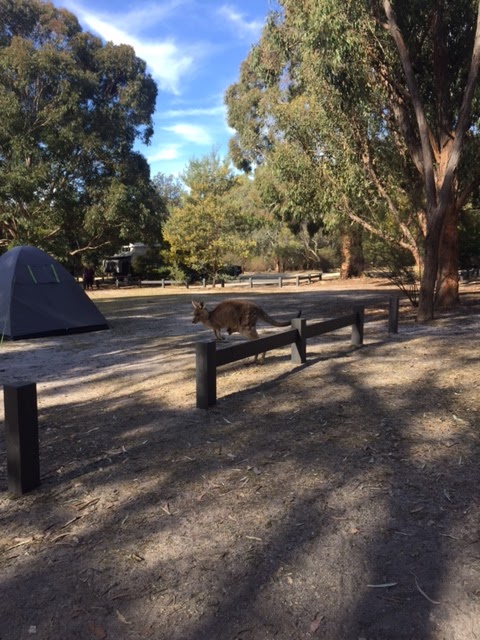
IMG_7483.JPG
Invasion of the kangaroos in our campsite!


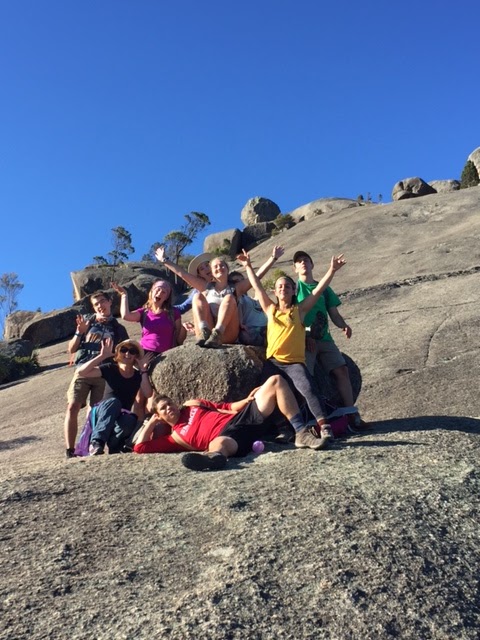
IMG_7553.JPG
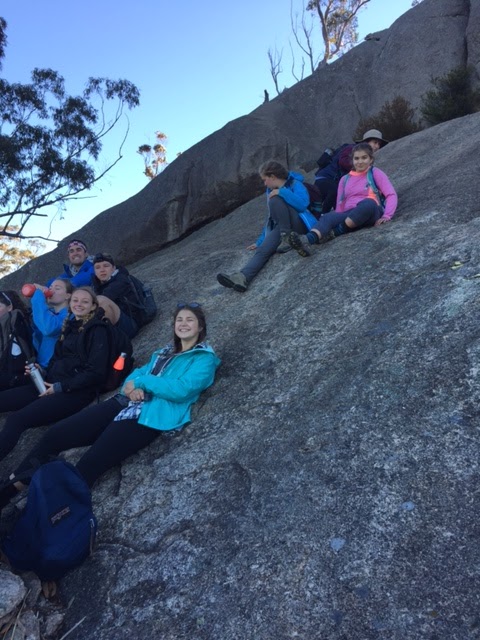
Climbing the Pyramid with the students.


IMG_7543.JPG
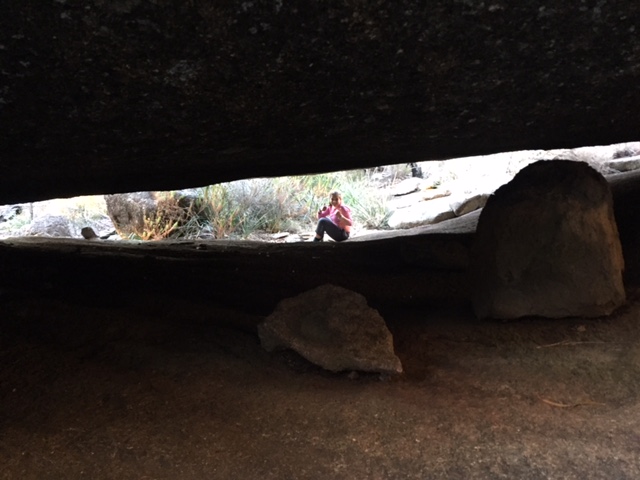
Thumbs up! (under Turtle Rock)

IMG_7504.JPG
John Hall lecturing us in the freezing cold.

Monday, September 11, 2017

A week ago I went to North Stradbroke Island with 25 college students, 3 professors, my family and a nice bus driver named Brentan. The locals call the island Straddie for short, so that is what I am going to call it. On Straddie, we stayed in a little house that was the color teal. The house was a one-floor house stuck in the 1950’s. The whole house was covered with pastel colors and jelly belly patterns. No joke. It was really cute. The house had a front porch, and we loved to sit out there and watch the sunset at the end of the day.
     
IMG_0013.jpg
On Straddie, we spent most of our time at the University of Queensland marine research station, where we went to lectures. The lectures were taught by a professor named Tom Cribb. Tom Cribb is a marine biologist that studies parasites in fish and other marine animals. He has identified over 1,000 parasites in fish.


As part of the class, Tom took us on a few trips around the island. My favorite was when we went to a beach called Cylinder Beach, and we played football, soccer and swam.  We also climbed a big rock. From the big rock, we saw a humpback whale.


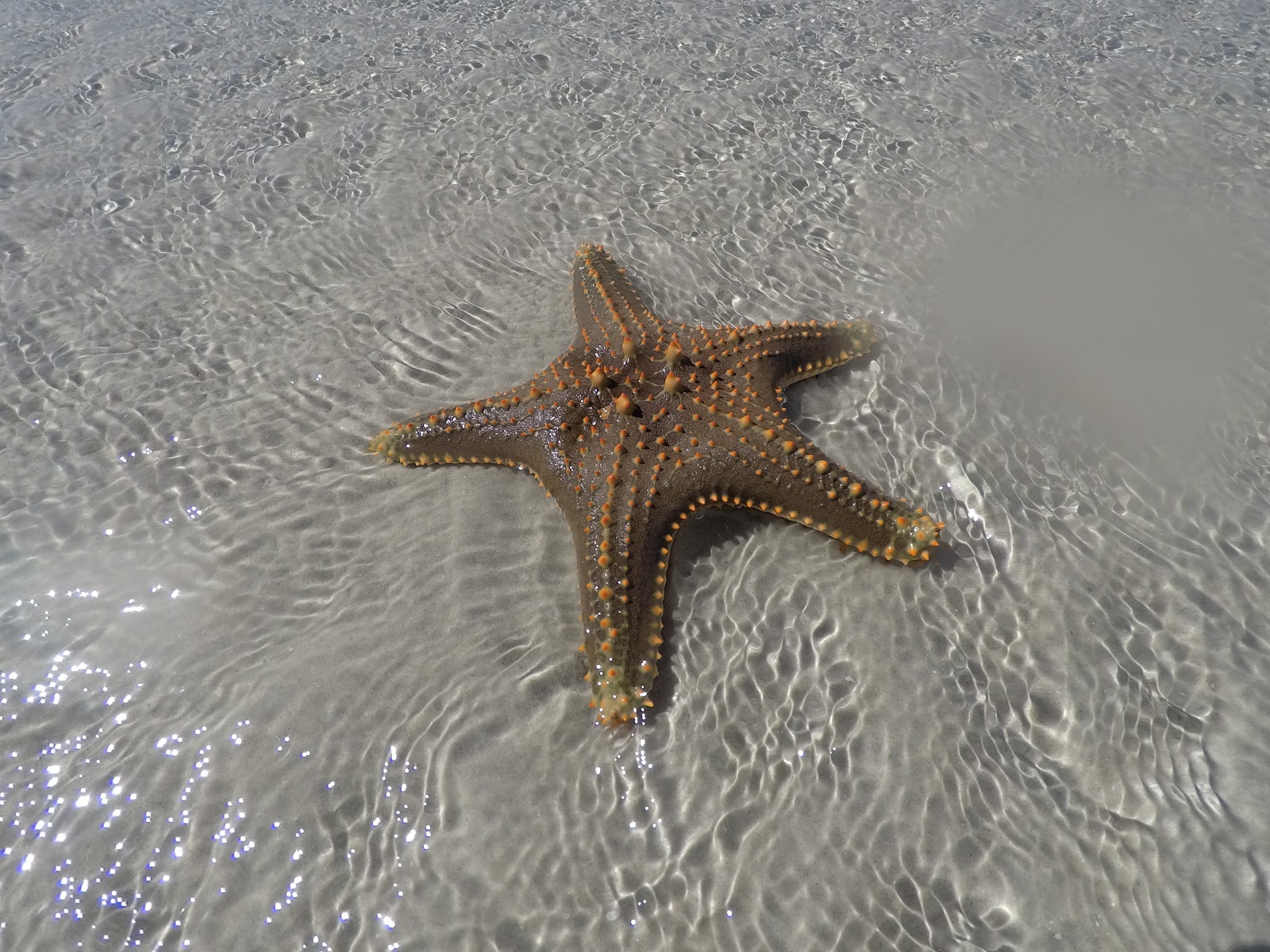
One day during low tide, we all went out searching for creatures and shells in front of the research station. We found a bunch of oyster shells, a large starfish, a needlefish, giant sea cucumbers, coral, and sponges.
GOPR0296.jpg


One of the sponges we saw was the poisonous, black slimy sponge. I didn’t touch it. On the last day, we went to Point Lookout for a walk on the boardwalk.  From the lookout, we could see more whales and dolphins and we even saw THREE wild kangaroos next to the path!
                                                                                      qq_20150804145002.jpg
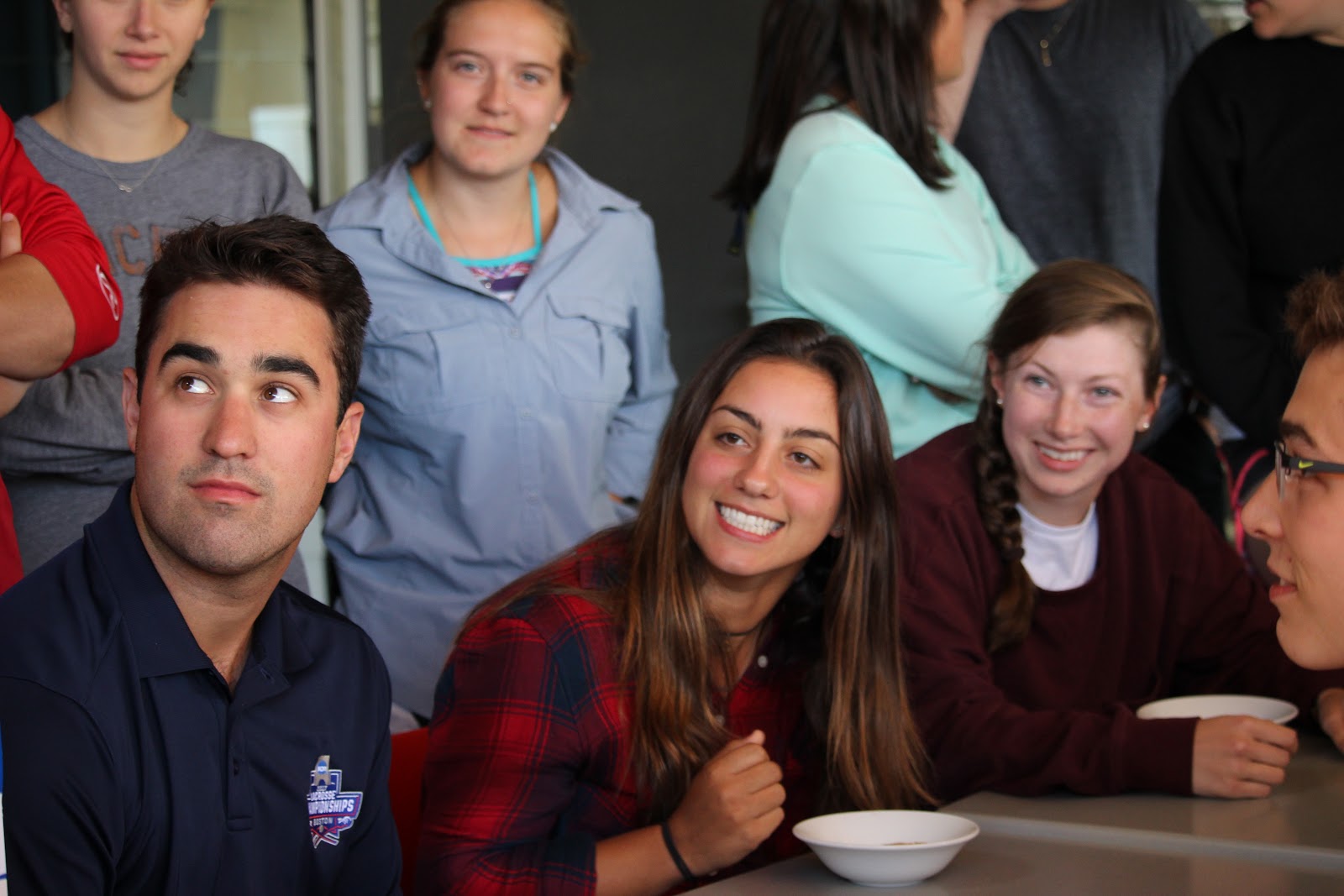
One day during afternoon tea at the research station, Tom brought out a box of Weet-Bix and said, “So guys, we are going to have a contest, to see who can eat the fastest. Now what you will be eating is a piece of so called food that looks like cardboard and tastes like cardboard, but is actually compressed cereal flakes that are really dry. Good luck.” The students were split up into three different groups and whoever ate their bar first moved onto the final round. The student who won the challenge was Will, and he is from Union College. I didn’t try the Weet-Bix, but I know at least one of the students liked them, even though they looked really dry.
IMG_0176.jpg
student excited for the WEAT-BIX challenge


Tomorrow morning we are leaving really early for a camping trip. I am not going to have internet. I promise to write more when I get back next week. I hope everyone is having a great time back to school!


Fun fact: The sea cucumber when it’s under its last resort for self-defense, it poops out all of its organs. We learned that first hand.   
IMG_0369.jpg
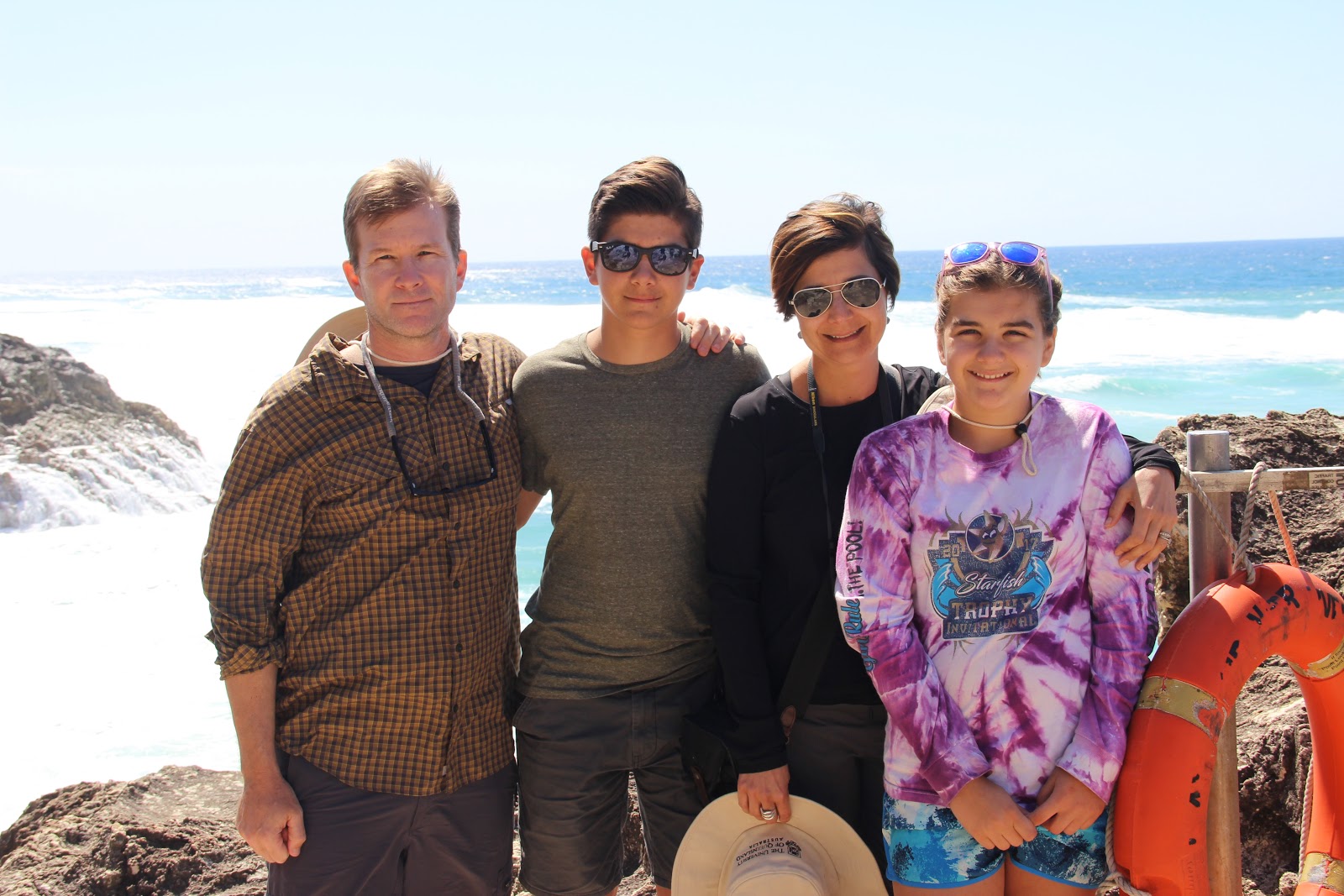
Family photo
                

Tuesday, September 5, 2017

Poems


I would like to say how much I miss my brother Emil and my friends from school. I also want to wish you a good year at school.
Poems

Since I’ve been in Australia, I’ve gotten into writing short poems inspired by songs I hear. I pick a song, and from a line or a phrase I create a short poem from it. I thought it would be cool  to share them with you.

So here it goes. The first one is from Paul Kelly - From Little Things Big Things Grow. I heard this song in the car, when my family was driving from Darwin to Litchfield National Park. That’s the park where the termite mounds were. If you don’t remember, check out my old blog post. This song is about the Aboriginal people trying to get back there land. Here’s my poem:

I am not one big thing,
I am many little things woven together.

The next song is from Mumford and Sons - White blank page.

A blank page is the difference between history and  the unwritten future.

The poem I wrote was inspired from a song by Lisa Mitchell - Neopolitan Dreams.

I turn my head up to the sky
I see you flying high.

I also have another poem I wrote, it goes like this:

When I close my eyes
all I see is light,
but when I open them
all I see is darkness.

Here are the songs that inspired me so you can listen to them.

From Little thing dig things grow - www.youtube.com/watch?v=6_ndC07C2qw


Tuesday, August 29, 2017


Safari Excursion

A few days ago we went on a four day excursion in what is called the Top End of Australia. It is called the Top End, because it is the northern tip of the Northern Territory (NT for short) of Australia. The NT is very large, but there is a very small population of people living there. The population is so small that the Territory is not an actual state. Our excursion started in Darwin, the capital of the NT, and ended in Darwin. In this excursion we went to Kakadu National Park, Arnhem Land, and Bamurru Plains.

"Jumping" saltwater crocodile


Day 1
The first day of our excursion we went across Fogg Dam. Fogg Dam is a road that goes through a failed rice field. Australia is covered in outside culture. What I mean by that is a lot of people in Australia are not originally from Australia. People have tried to bring a lot of outside ideas, like growing rice. They built Fogg dam to grow rice. The rice project failed because the water levels in the wet season were unbelievably high and the magpie geese were eating the rice. At Fogg Dam we saw a bunch of birds. Fogg Dam is a huge wetland so it is covered with different kinds of grass and a bunch of little patches of shallow water.

Wetland at Fogg dam

After Fogg Dam we went on a jumping croc cruise on the Adelaide River. We saw so many crocodiles and birds. The skipper of our boat put raw meat at the end of a long pole and got a few crocodiles to jump out of the water! They are so big! When the crocodiles want to cool down, they get out of the water and open their mouths.  It looks like they are yawning, very funny. The next stop was at a resort that was near the campsite we were staying. At the resort we got drinks to cool off. Next we went on a sunset cruise on the Yellow River, which was really cool. On the Yellow River cruise we saw crocs birds and a magnificent sunset. In Australia ,the sun sets really fast and it sets at 6:30 pm, so it will 7:00 pm and pitch black. The reason it sets so fast is that Australia is so close to the equator.  
Yellow river


Saltwater crocodile on Yellow river

After the cruise, we went to a campsite that had safari tents. We spent the next two nights there. That night  we had dinner by the fire. For dinner we had salad, steak,  sausage, and pork. It was so good. Dean, our guide called it a meat-fest. That night we slept in the safari tents. The tents were so small you could only fit two beds in there but they were so fun to stay in. that night I stayed with my mom in the tent. In these tents you could hear everything outside which was so creepy.


Cooking dinner (meat fest)


Day 2
Rock art - Injalak hill
The next day we went to Arnhem Land. This is a sacred land  to the Aboriginal people, and we had to have a special permit to enter this region. On our way to  Arnhem Land we crossed a road that went through a river that was infested with crocodiles. In  Arnhem Land there are many little different villages. The village we went to was called Gunbalanya. In this town is a big art center. In the art center they sell  art that the villagers make. The villagers make painting and baskets.  They also do  silk screening. We got to see women weaving baskets and men painting. The men painted animals and plants. They planted with acrylic paint and traditional paint made out of rocks and charcoal.  After we went to the art center we went to a sacred hill that the Aborigines took shelter on during the wet seasons.  During the wet season, the entire valley floods, so indigenous people had to leave the lowlands and go high on rock hills. We hiked the hill with a really nice Aboriginal guide named Gabriella, and when we got to the top we had lunch. Gabriella showed us the three resting spots of her people. We saw a bunch of cave art and Gabriella told us that the paintings were two hundred years old. Gabriella told us the  stories of her people. When we started down I saw a skull sitting there, just sitting there! The skull was pure white and it was sitting in between two rocks. Gabriella told us it was a burial site. That many Europeans have stolen the old bones and taken them to museums all over the world.  After that we made our way down the hill  and got back in the car and went back to the village and got a few pieces of art. Then we went to the resort to swim in the pool. Next we went back to our campsite and had dinner.

Yellow river


End of another great day by the fire


Day 3
The next day we went to Maguk Falls. We swam at the falls for about an hour, the water was warm and there were no crocodiles, so it was safe. After that we got in a car and drove to the Bamurru Plains. In Bamurru we stayed in a cabin. Before dinner we went for a swim and we went on a drive to a billabong to watch the sunset. at the billabong we saw horse, water buffalo, and a lot of birds. We even saw a buffalo skeleton. Then we went to sleep.
Sunset on the billabong


Day 4
The last day went had breakfast and swam. Then we went on an air boat ride which was so cool. I even got to drive it. We saw a lot of water buffalo and birds. After lunch we drove back to Darwin and a few day later we took a plane back to Brisbane.

I want to thank Dean our guide. My mom and dad for taking us on this excursion and Lord's Safari.
http://www.lords-safaris.com

Friday, August 18, 2017

Litchfield National Park

Yesterday I went to Litchfield National Park. On the way everything was red, brown, and orange. We went to Lichfield National park because we wanted to see the giant magnetic termite mounds and swim underneath the water falls; Wangi Falls and Florence Falls.
There are two kinds of termites. They are called Nasutitermites triodinae which make cathedral shaped mounds and Amitermes mederidionalis which makes magnetic mounds where the flat side of the mound faces north and south and the point faces east to west so the mound does not overheat. The Cathedral mounds are built on top of dry soil so that is why the mounds from those termites are red and the Magnetic mounds are built on seasonally flooded black soil so the mounds are gray. Some of the mounds can get up to 5 meters high (thats 15 feet high!).The mounds group around dead trees until there is no tree left then the termites move onto a new tree.

After the termite mounds we went to Wangi falls. Wangi falls is a beautiful water fall. There was two water falls at the site and a giant swimming hole. We also saw a lot of fruit bats. We had lunch there and then we drove to Florence falls. We also swam at Florence falls.


A poem I wrote inspired by the song "From Little Things Big Things Grow".

I am not one big thing 
I am many little things
Woven together 

Wangi Falls
Cathedral termite mounds
Us
Magnetic termite mound

Monday, August 14, 2017

The missing day


I am going to tell you a story about my trip to Australia. A few days ago my family and I hopped on a plane to Montreal Canada. Then we took a flight to Vancouver, which is a city on the west coast of Canada. The next flight we took was from Vancouver to Brisbane Australia. The flight to Australia was 14 and ½ hours long. On the plane, I slept for 10 hours straight and I missed dinner!!! I also watched “The Princess Bride”. P.S.This is the best movie ever because it is a romcom. The movie has three different plots. It is hard to explain, but I highly recommend it.

Now you might ask, “Clio, what about the missing day?” Well, on the flight to Australia something funny happened. All of the sudden, we crossed the international date line. The international date line is basically a line halfway from the prime meridian, and it divides two calendar days. When you cross the international date line east to west, you gain a day. When you cross it from west to east you lose a day. So when we were flying over the Pacific ocean on Saturday, we went into Monday morning when we crossed the date line. Australia is 14 hours ahead of Albany, NY. When you wake up in the morning, I am getting ready to go to sleep at night. So basically, I’M FROM THE FUTURE!! Next time I write a blog post, I will predict the future of the next day!
These are two videos are from my take off from my take off from Boston and my landing from Brisbane.
;

Friday, August 11, 2017